
Craft, Capacity and the Everyday: Why the People Behind Places Still Matter Most
"If we can't do it, to be frank, who the hell can?"
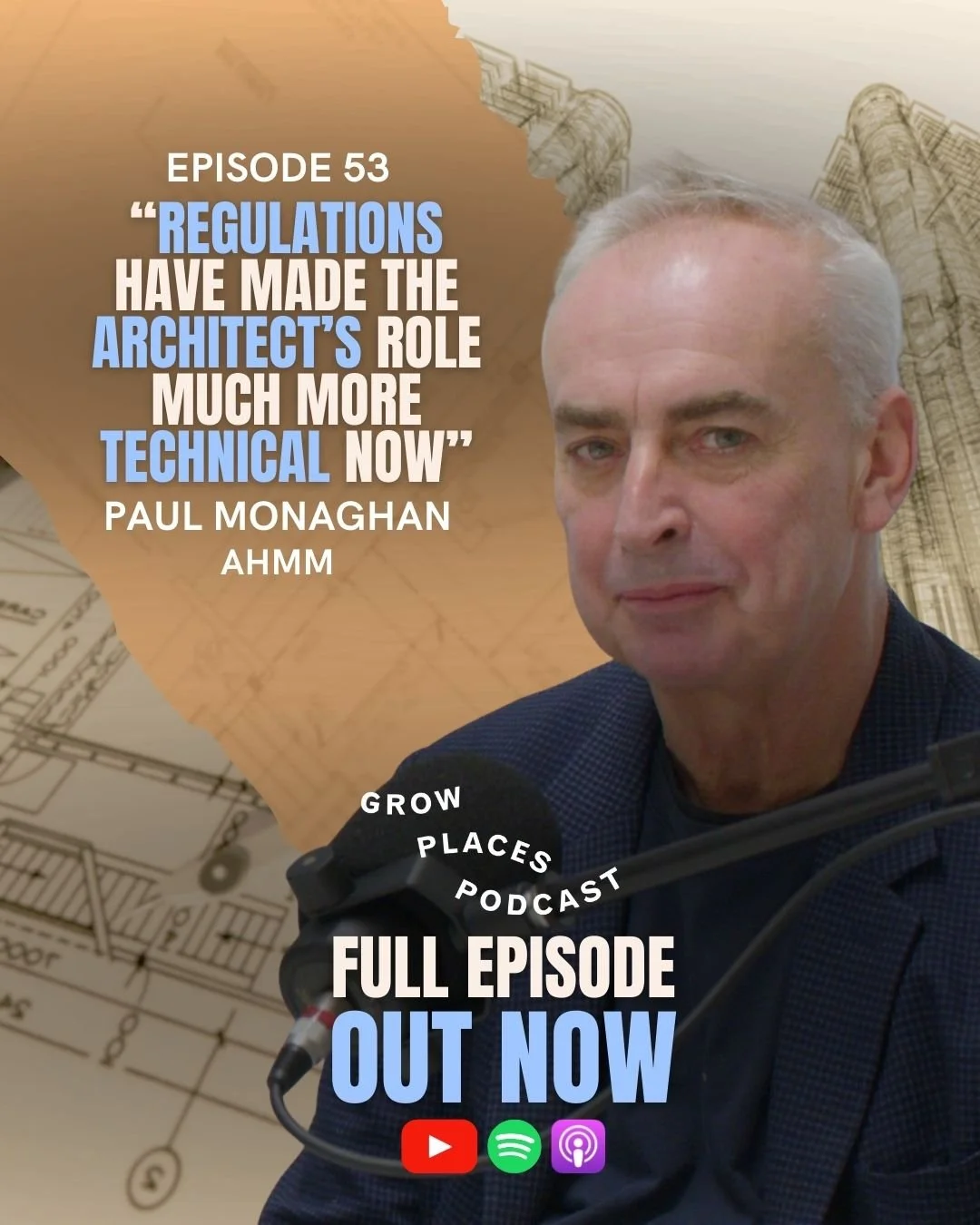
Paul Monaghan, AHMM
Hi everyone,
Welcome to the March edition of Grow Places Insights.
Paul Monaghan was talking about the responsibility of a firm at AHMM's scale to invest in its people and pay them properly. But the line carries a broader weight. If the organisations with the greatest experience, the deepest relationships and the most established reputations are not championing the people behind the places we build, then what hope does the wider system have?
That question ran through both of this month's conversations.
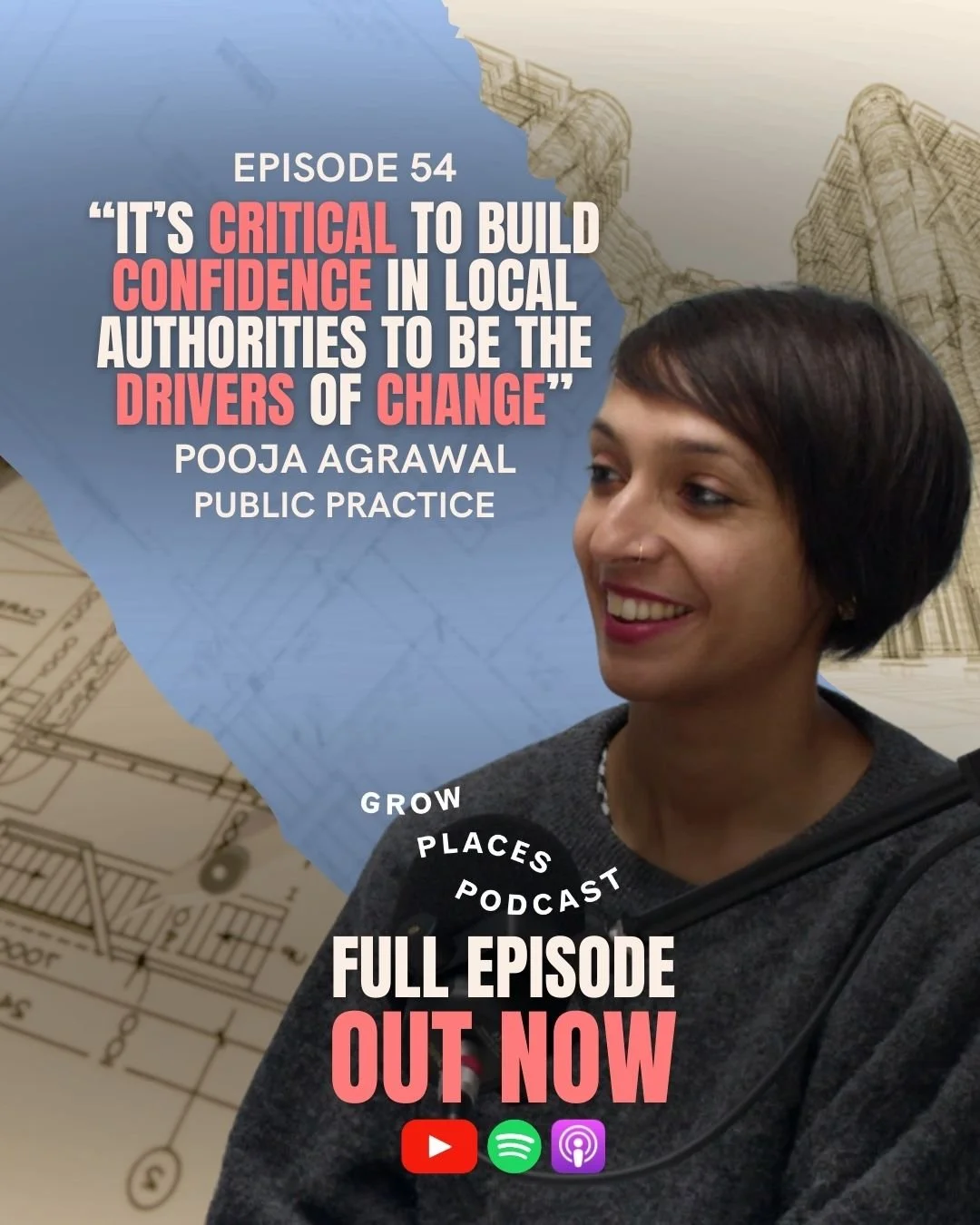
One with Paul Monaghan at AHMM, reflecting on over 35 years of architectural practice, the culture of building well, and why the ordinary buildings of a city deserve the most care. The other with Pooja Agrawal atPublic Practice exploring what happens when local government loses the skilled people it needs, and what it takes to bring them back.
One conversation was rooted in studios, building sites and the long arc of a practice shaped by craft. The other in council offices, Whitehall corridors and the urgent work of rebuilding public sector capability.
Yet the more we sat with them, the more they converged on the same insight.
The quality of our places depends, fundamentally, on the quality of the people behind them, their skill, their care, and their willingness to stay.
Architecture for the Everyday: Craft, Listening and the Long View
"We often talk now about it being the ordinary buildings and turn them into extraordinary buildings."
Paul Monaghan, AHMM
AHMM has grown from four people in 1989 to 450, delivering projects across the world and winning 67 RIBA awards. But what came through most clearly was not the scale of the practice, it was the attitude that shaped it.
Paul described starting out in a total recession, never having the luxury of arrogance. They learned to listen, to build within constraints rather than resent them. They embraced design and build when others dismissed it, went to the pub with contractors, learned their techniques, found ways to make modest budgets produce buildings that looked far more expensive than they were. That pragmatism has not dulled their ambition, it has sharpened it.
"We grew up in a total recession. We never had the chance to even be arrogant."
He was candid about the current climate. Housing has become increasingly prescriptive, driven by appraisals and regulations that push every architect towards the same outcome. Construction costs have stalled delivery. Every work stage involves a pause and a renegotiation. Yet in difficult times, experience and reliability become the most valuable currencies. Clients want people who can get planning, who understand value, who will not walk away when things get complicated.
What stays with you, though, is Paul's reflection on what architecture does when it works. A doctor's surgery that transformed a team's working life. A school where results rose alongside the quality of the building. A bereavement centre in Liverpool where grieving parents find peace in a space designed around a secret garden.
"My brother's a TV producer. He can make people cry. We can't. But actually, occasionally we have."
The recent decision to expand AHMM's board, bringing in long-serving colleagues, some with over 30 years at the practice, reflects the same conviction. People stay because they are trusted, because the work is good, because they see a future. That retention is not incidental to the architecture, it is the foundation of it.
Rebuilding Capacity: Skills, Empathy and the State of Local Government
"The biggest risk is councils are always on the back foot and not being able to be more proactive and strategic."
Pooja Agrawal, Public Practice
If Paul's conversation was about the slow accumulation of skill and trust within a practice, Pooja's was about what happens when those qualities drain out of the institutions we rely on most.
In the 1970s, around 80% of architects worked in the public sector. By the time Pooja was studying, it was less than 1%. The people who once shaped places from within local government had largely disappeared, and with them went much of the confidence and capability that councils needed to lead. Public Practice was founded to address that, placing skilled professionals from the private sector into local authorities and supporting them through the transition.
Over the past decade, they have placed around 300 people into over 100 councils, with more than 75% still in local government three years later. But the landscape has become significantly harder. Planning teams have seen real-terms budget cuts of around 43%. Councils are so financially constrained that signing off even £3,000 can require chief executive approval. London alone is spending four million pounds a day on temporary accommodation, a cost that is quietly bankrupting boroughs and crowding out the longer-term investment that would address the underlying problem.
"I would just say to lean on empathy a bit more."
Pooja made an important distinction between what councils are asking for and what they actually need. The most common request is for development management planners to clear backlogs. But the deeper need is for strategic planners, sustainability officers, housing specialists, people who can take the longer view that out-of-date local plans and reactive decision-making have made almost impossible.
With devolution, local government reorganisation and planning reform all converging, she sees both risk and opportunity. But her call was clear, and it was directed at the private sector as much as the public. The relationship between the two has become adversarial in many places, and what is needed now is empathy, an honest recognition of how overstretched planning teams are, and a willingness to invest in the human relationships that make collaboration possible.
Three Reflections We’re Carrying Forward
First, craft is cumulative and it depends on people staying. Paul's account of AHMM's growth is not a story of breakthrough moments but of steady accumulation, learning from contractors, refining details, building relationships with clients over decades of repeat work. That depth of knowledge cannot be assembled quickly or outsourced easily, it is earned through commitment, and it is sustained by creating environments where talented people want to remain. The same principle applies in the public sector, where Pooja's work shows that placing skilled people into councils only matters if those people are supported well enough to stay.
Second, the everyday deserves the most serious attention. Paul's lifelong focus on ordinary buildings, the offices, schools and housing that form the backdrop to daily life, carries an argument that is easy to state but difficult to sustain in practice. Similarly, Pooja's observation that a resident's relationship with their council often comes down to whether the bins are collected speaks to the same truth. The places and services that shape everyday experience are not glamorous, but they are where trust is built or lost.
Third, capacity is not a background condition, it is a deciding factor. We often discuss delivery as though it were constrained primarily by policy, funding or political will. Both conversations suggested something more fundamental. When skilled people leave the public sector, councils become reactive rather than strategic. When architects understand value and can communicate clearly, projects move forward. When relationships between public and private are adversarial rather than empathetic, friction increases and progress stalls. The capacity to deliver is not a supporting condition for growth, it is the condition.
Looking Ahead
What connected these two conversations was not a shared policy position or a common sector, it was a shared conviction that places are made by people, and that the quality of what gets built reflects the quality of the teams, relationships and institutions behind it.
Paul described an industry where experience and reliability have become the most valuable qualities a practice can offer. Pooja described a public sector where the loss of those same qualities has left councils unable to plan strategically or respond confidently to the pressures they face.
Both pointed towards the same conclusion. If we want better places, we need to invest in the people who make them, not only by training them or recruiting them, but by creating the conditions in which they can do their best work and choose to stay.
That is not a dramatic reform. It is a patient, practical commitment, and it may be the most important one we can make.
More soon,
The Grow Places Team
Missed the conversations?
Catch the full podcast episodes at www.growplaces.com/podcast