
Trust, Growth and the Places Between: Why Delivery Still Depends on Alignment
“It just shouldn’t be this hard.”
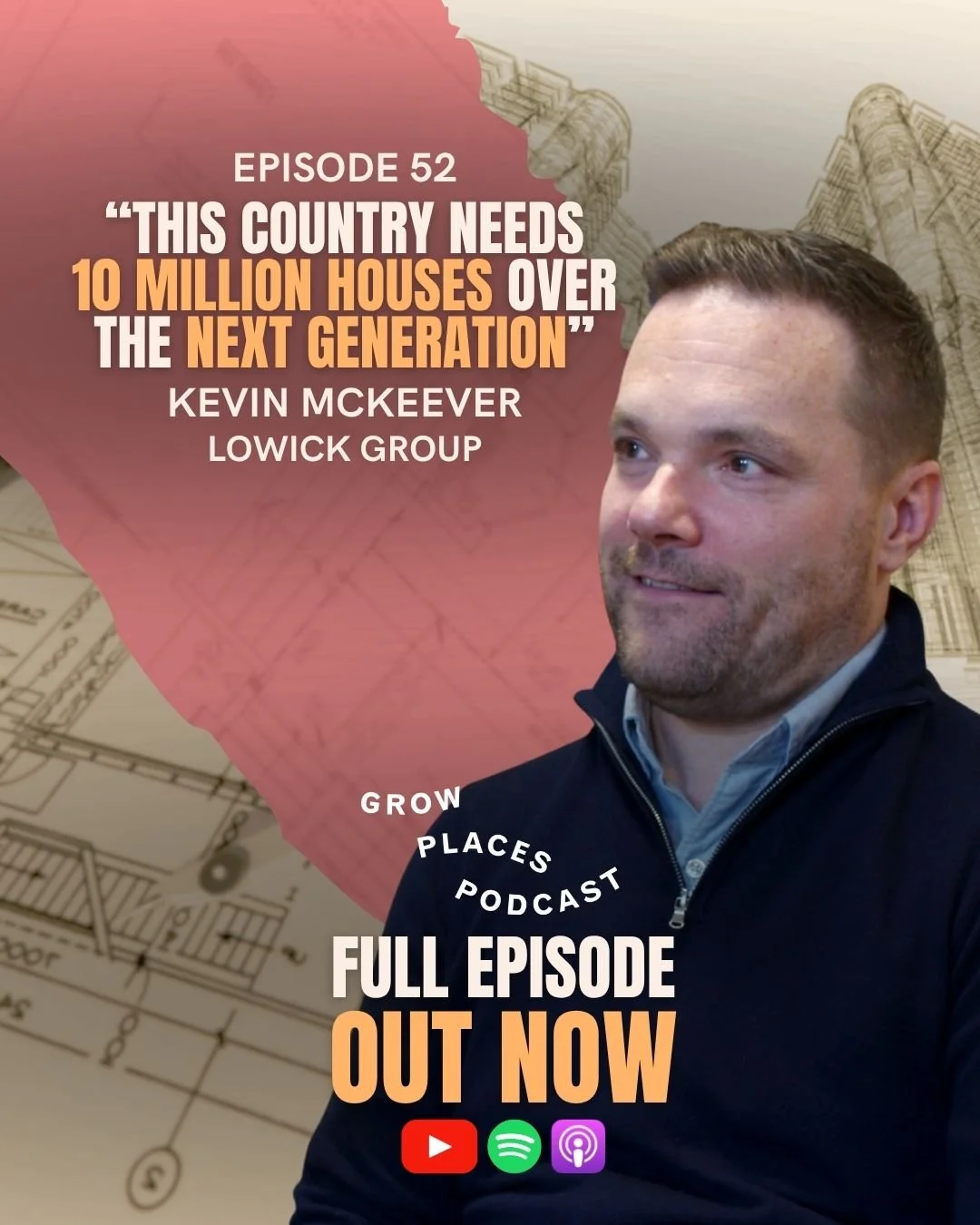
Kevin McKeever, Lowick Group
Hi everyone,
Welcome to the February edition of Grow Places Insights.
This month, we have brought together two conversations that, at first glance, sit at very different scales.
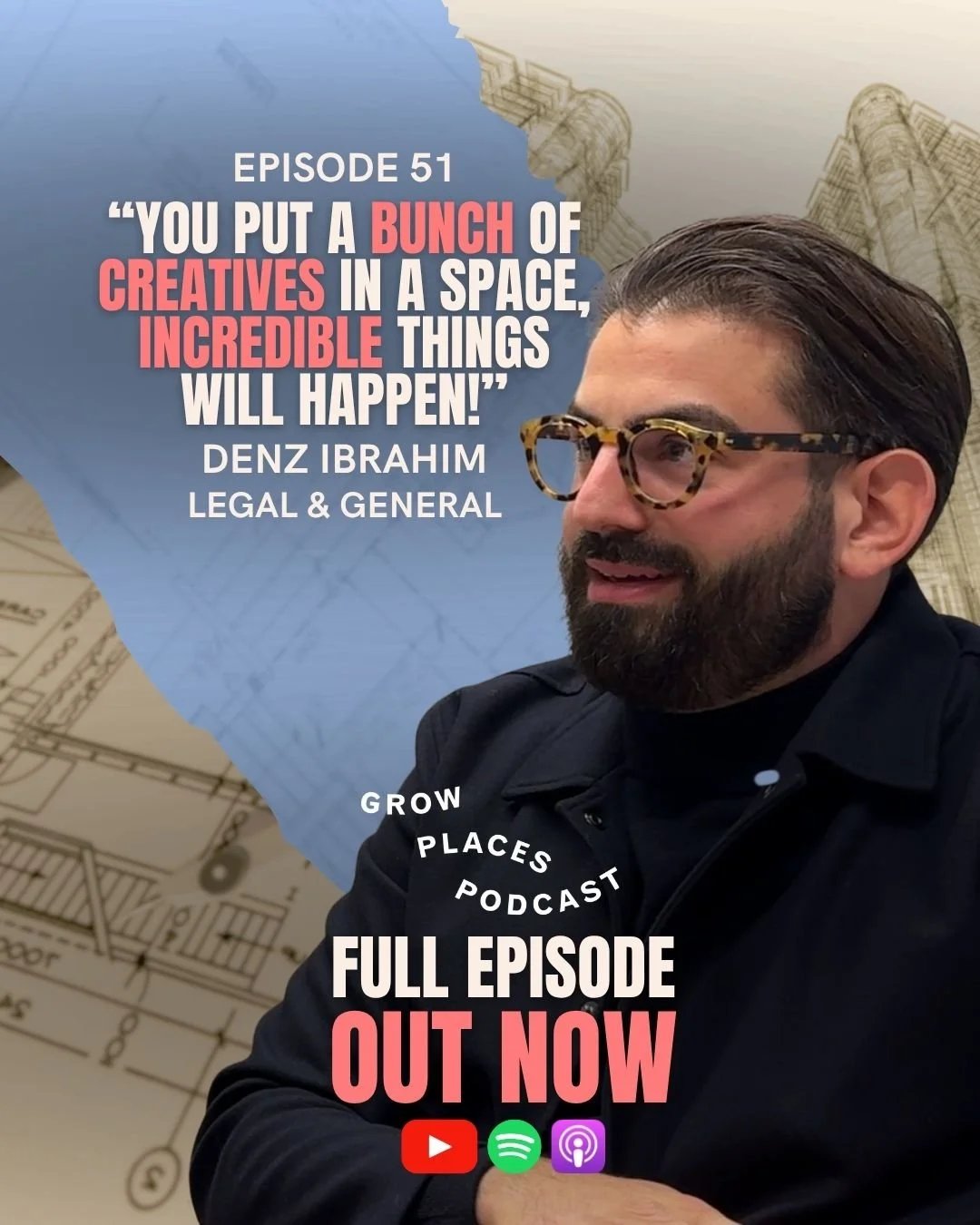
One with Kevin McKeever at Lowick Group, reflecting on UK politics, housing and the growth agenda, the other with Denz Ibrahim at Legal and General IM, exploring neighbourhood activation, independent enterprise and what gives a place its personality.
One conversation was rooted in Westminster and economic policy, the other in ground floors, makers’ studios and the daily rhythm of neighbourhood life.
The more we reflected on them, the clearer the connection became.
Both, in different ways, were about trust.
Housing, Growth and the Confidence Question
“A good, safe society grows off the back of a secure home.”
Kevin McKeever, Lowick Group
Kevin’s point was simple, but difficult to ignore.
We often talk about growth in terms of percentages, targets and forecasts, yet in lived terms growth is much more personal, it is the belief that your life can expand rather than contract, that your work creates opportunity, that your children will have more options than you did.
That belief starts with security, and security starts with home.
If people do not feel stable in where they live, everything else becomes tentative, changing jobs feels risky, starting a business feels reckless, having children feels financially fragile, even engaging in the life of a neighbourhood becomes conditional.
Housing, in that sense, is not just a supply challenge, it is a confidence question.
We spoke about the broader atmosphere, what Kevin described as an age of uncertainty, economic pressure, political volatility, a planning system under strain, and a relationship between public and private sectors that at times feels brittle.
There is frustration on all sides.
Developers feel viability is treated with suspicion, local authorities feel promises are not always honoured, communities feel change is imposed rather than shaped together.
When trust weakens, friction increases, and when friction increases, delivery slows, not because ambition disappears, but because confidence does.
“In order to distribute wealth, someone has to create it in the first place.”
It is a statement that contains its own tension, growth must happen before it can be shared, yet growth struggles to happen in a climate of instability.
Trust is built practically, by delivering what is promised, by keeping frameworks stable, by acknowledging constraints honestly rather than theatrically.
“It just shouldn’t be this hard.”
There was no ideology in that line, just fatigue and a quiet sense that we can do better.
Place Personality and the Work Beneath the Numbers
“The biggest risk to real estate is commoditisation.”
Denz Ibrahim, Legal and General IM
If Kevin’s conversation focused on national confidence, Denz’s focused on neighbourhood confidence.
His concern was not primarily about market cycles, it was about sameness, about new places that feel technically complete but emotionally hollow, about ground floors that look interchangeable from one development to the next.
When everything feels generic, nothing feels worth defending or investing in.
At New Acres in Wandsworth, the team at Legal and General chose a different approach, instead of defaulting to a small number of large commercial units they curated nearly fifty independent businesses, instead of rigid rental structures they introduced turnover based models to support emerging operators, instead of waiting for completion to activate the place they embedded a Foundry workspace early, creating energy before the wider neighbourhood had fully taken shape.
The question shifted from “What rent can this unit achieve?” to something more fundamental, “What kind of life should this neighbourhood support?”
Denz put it well, “No one wants to live in a destination.”
Destinations are places you visit and leave, neighbourhoods are places you stay.
That difference is subtle, but powerful, a neighbourhood needs rhythm, not spectacle, not a launch moment but a steady hum, classes, markets, small businesses, everyday rituals that make a place feel lived in rather than staged.
That hum does not appear by accident, it requires curation, patience and a long term view of value creation, it requires treating independent operators as partners rather than simply tenants, it requires recognising that personality is not decorative, it is structural.
Places with identity build attachment, and attachment builds resilience.
Three Reflections We’re Carrying Forward
First, security is the foundation of growth, without stability in housing and policy both people and capital hesitate, confidence is not a soft metric, it is the multiplier beneath everything else in our system.
Second, personality carries economic weight, places that feel distinct and human tend to outperform those that feel interchangeable, belonging is not abstract, it translates into retention, reputation and long term value.
Third, trust functions as infrastructure, we often talk about roads, transport and utilities as the enablers of development, trust between sectors, between landlord and occupier, between project and community performs a similar role, when it weakens friction increases, when it strengthens delivery accelerates.
Looking Ahead
What struck us most is that neither conversation was really about politics or placemaking in isolation, they were about alignment.
Alignment between ambition and realism, between policy and delivery, between investor intention and community experience.
Growth is often framed as something that can be unlocked through a single reform or intervention, in reality it rarely works that way.
It is built through systems that feel dependable and through places that feel worth investing in, emotionally as well as financially.
If we want 2026 to be a year of genuine progress, the question is not only how much we can build, it is whether we can rebuild confidence alongside it.
Growth rarely stalls for lack of ideas, it stalls when the relationships around those ideas no longer feel solid.
Strengthen those relationships, even incrementally, and progress becomes possible again.
More soon,
The Grow Places Team
Missed the conversations?
Catch the full podcast episodes at www.growplaces.com/podcast