Learning from the Brief: Why Story, Process and People Still Shape the Best Places
“Sometimes the client doesn’t know what they want. You become the midwife.”
- Kai-Uwe Bergmann, BIG Architects
Welcome to the first edition of Grow Places Insights for 2026.
To begin the year, we’ve gone back to two conversations recorded in 2025 that have stayed with us. One is with James Armitage-Hobbs, Director at DP9, reflecting on a decade of delivering co-living projects in central London. The other is with Kai-Uwe Bergmann, Partner at BIG, exploring how large-scale, visionary projects take shape through deep collaboration and a willingness to challenge the brief.
Both conversations reminded us of something simple but important:
Well-designed places are rarely born from certainty.
They come from curiosity, persistence and asking the right questions early.
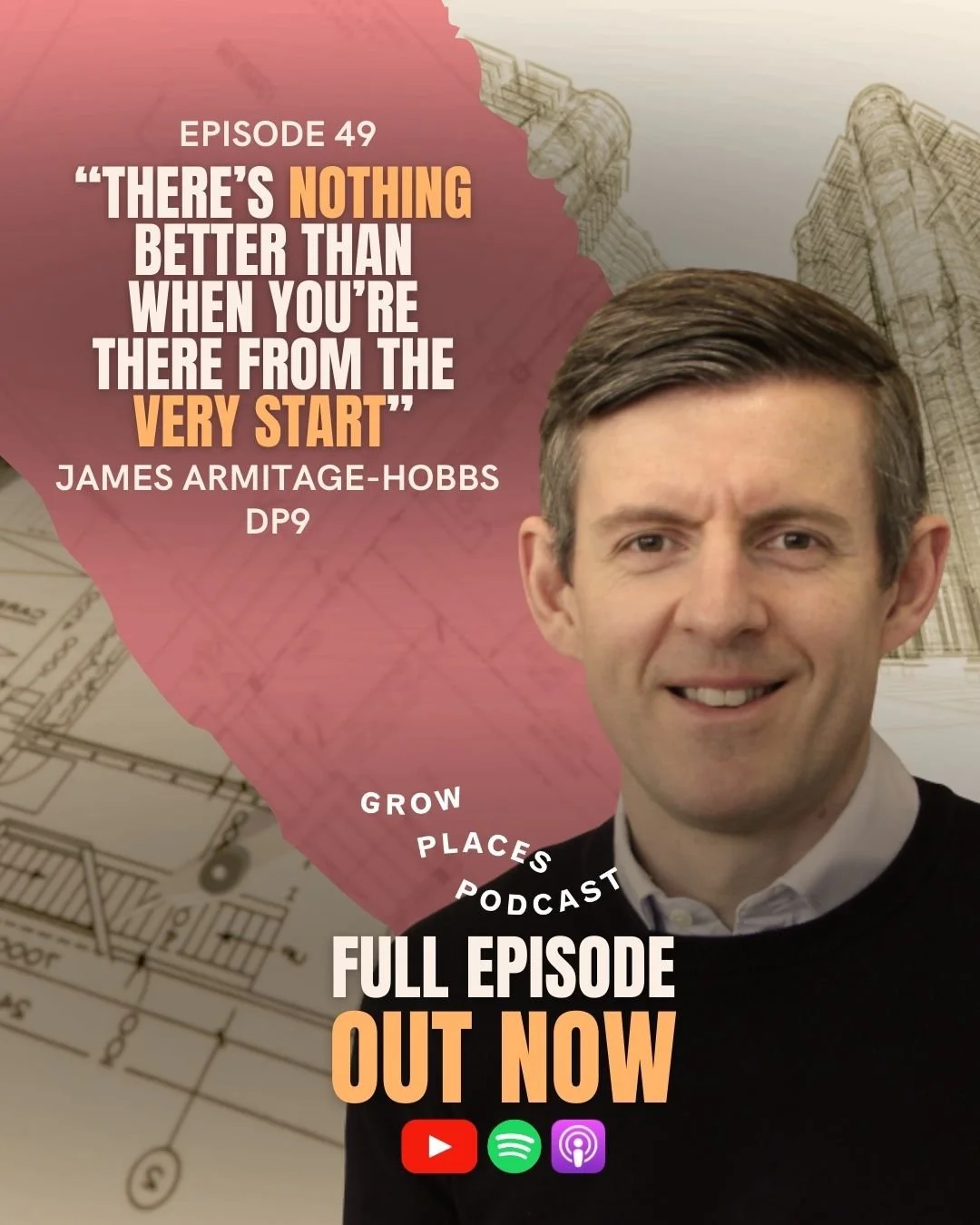
Episode 49: Co-Living and the Case for Better Urban Living
“You don’t just live within the room, you live within the building.”
- James Armitage-Hobbs, DP9
James offered a clear view into how co-living has evolved into a recognised model. When the first schemes came across his desk, there was little to no policy guidance, and plenty of scepticism.
“We were going to see planners, politicians, other stakeholders with pictures on pages… it was only when we started to get some live case studies… that it was easier to show how it works.”
He spoke about how early projects helped demonstrate quality, management, and public benefit, shifting the conversation from confusion to delivery.
“People don’t always get it right the first time… but we’ve looked at what’s worked, what hasn’t, and how the next generation of co-living schemes can do more — particularly when it comes to affordability and community.”
James also emphasised that co-living now serves a wider demographic than expected.
“We’re seeing retirees moving in… or older people who are lonely, living on their own, and want to be part of a community again.”
And for sites that have stalled under traditional residential models, co-living can unlock progress.
“There are a lot of stalled sites in London. Co-living is helping to bring them forward again, in part by delivering affordable housing alongside.”
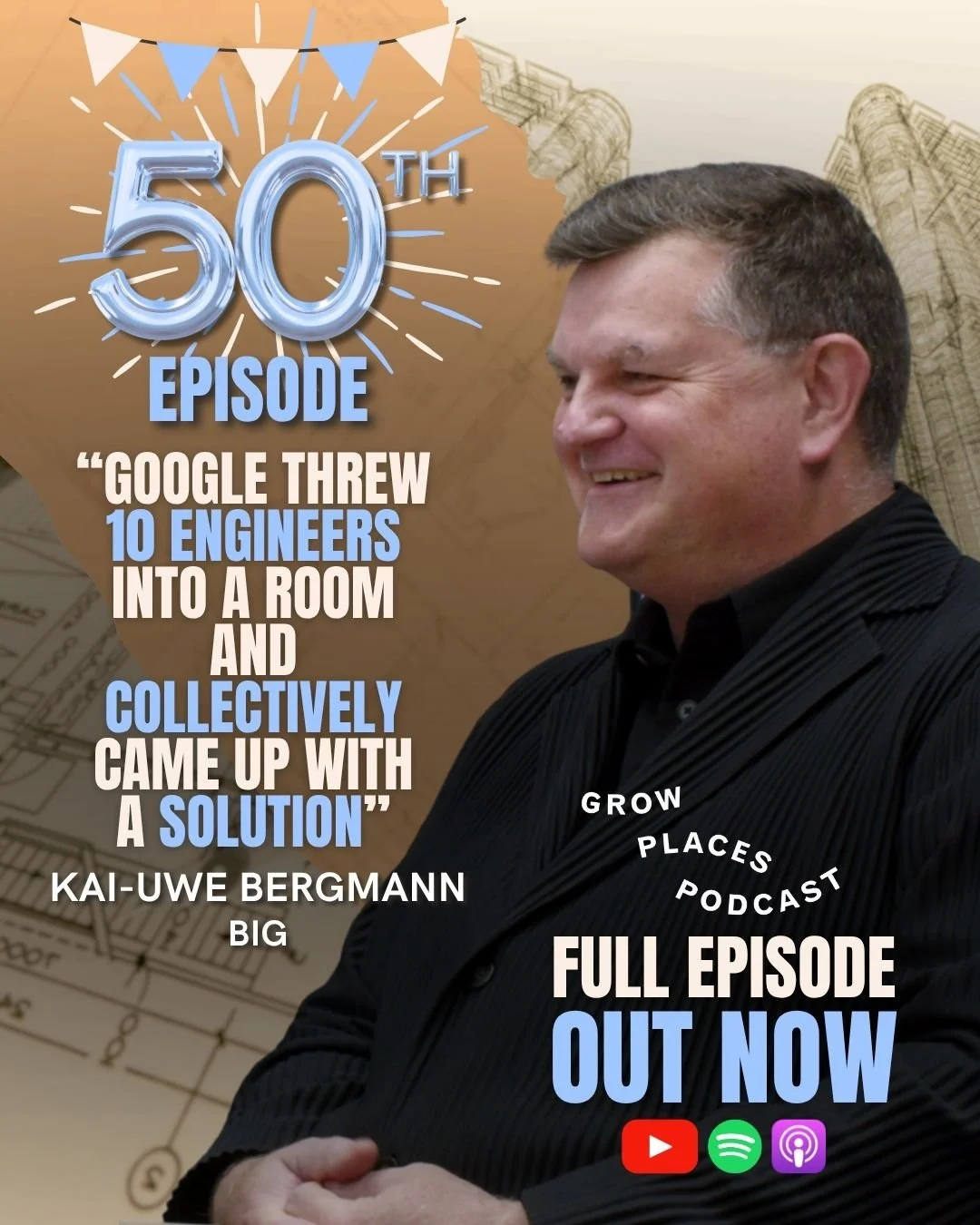
Episode 50: Design, Impact and the Power of the Brief
"The plot is the land, the plot is the drawing… and the plot is the story.”
— Kai-Uwe Bergmann, BIG Architects
Speaking with Kai-Uwe gave us a valuable window into how BIG approaches design, particularly when the challenge is large-scale, complex, and politically sensitive.
We spoke about Copenhill, the waste-to-energy plant in Copenhagen that now features a public ski slope, climbing wall, and education space.
“What we understood from the brief was: how can that same investment become a gift to the community?”
He described it as a project where utility infrastructure became a public asset, raising quality of life and shifting public perception.
We also talked about the Big U in New York, a flood protection project wrapping around lower Manhattan, and how it’s managed to carry through multiple political cycles by telling a story people can rally behind.
“How do those four, five, six administrations actually buy into a ten-mile-long flood management system?”
Kai-Uwe spoke about the role of the architect not only as a designer, but as someone who helps shape and even challenge the brief itself.
“When you think back on your best projects, it goes back to the best briefs — which again goes back to the best clients… or at least, the ones willing to ask the right questions.”
Three Insights We’re Taking into 2026
A better brief is the foundation of everything
James highlighted how co-living only progressed when real projects clarified what the model could offer. Kai-Uwe spoke about co-creating briefs that reflect more than the baseline. In both cases, the brief wasn’t fixed, it was explored, tested, and strengthened.
Public value must be embedded from the start
From infrastructure that invites public use, to co-living schemes with shared ground-floor space or on-site affordable housing, both guests reminded us that the most successful projects give something back, and do so in visible, lasting ways.
Process shapes outcomes
Both guests emphasised that strong delivery doesn’t come from a single vision, but from a collaborative process that adapts as it goes. Whether navigating city politics or changing policy, the ability to hold a long-term view is what carries good projects through.
Looking Ahead
These weren’t conversations about style or even innovation. They were about how good projects are made through process, persistence, and partnerships that build trust over time.
This year, we’re focused on shaping better briefs, helping teams ask stronger questions, engage earlier, and create places that can do more than simply meet standards.
“It’s the narrative that creates the architecture.”
— Kai-Uwe Bergmann
If you’re working on a site or a scheme where that resonates, we’d love to hear from you.
More soon,
The Grow Places Team
Missed the conversations?
Catch the full podcast episodes at www.growplaces.com/podcast