
The Synthesis Skill: Why Heritage and Data Both Depend on Connecting What Exists
"Retaining knowledge won't be the key to professional success. It'll be much more about your ability to synthesise"
John Williams, Scail UK
Hi everyone,
Welcome to the April edition of Grow Places Insights.
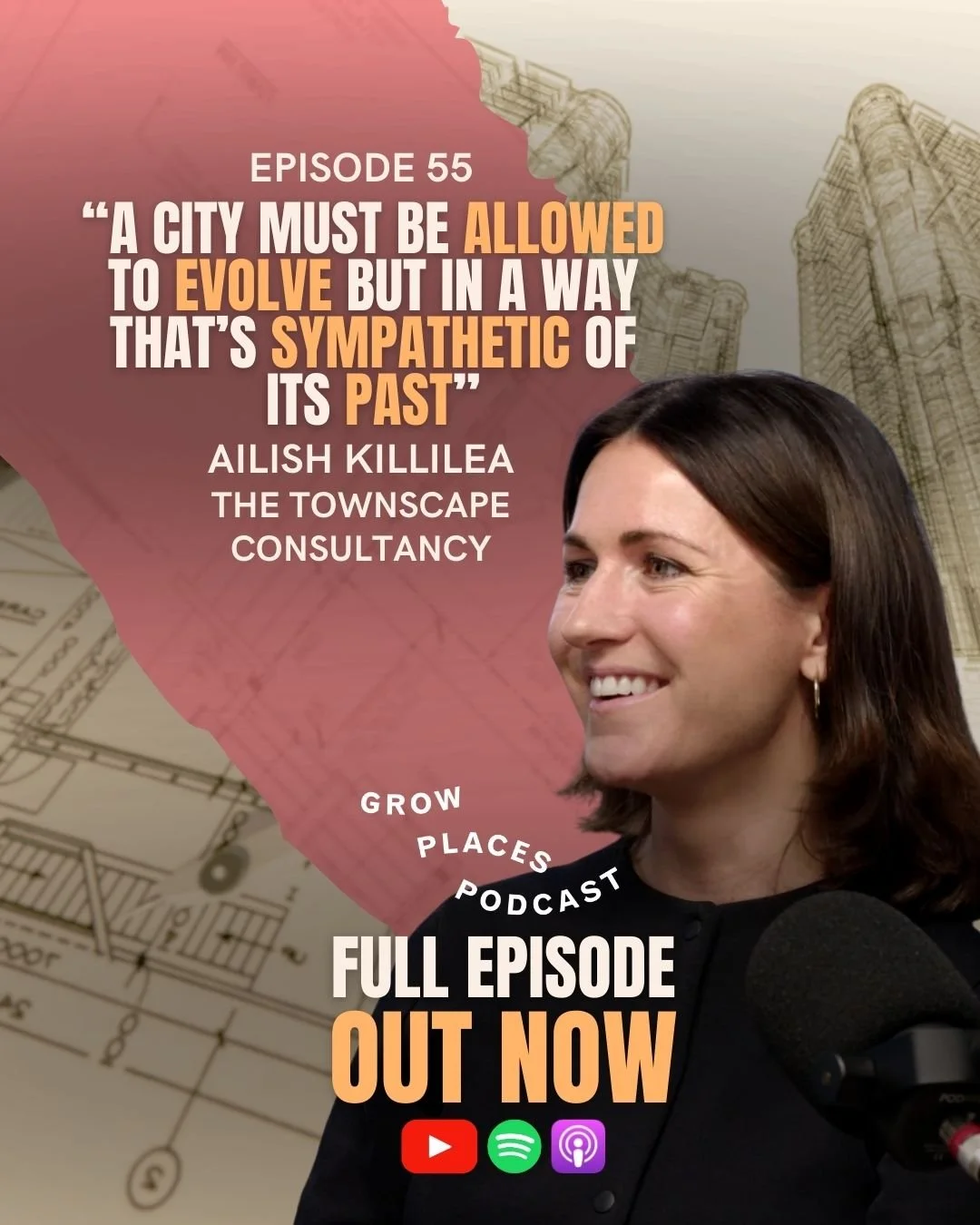
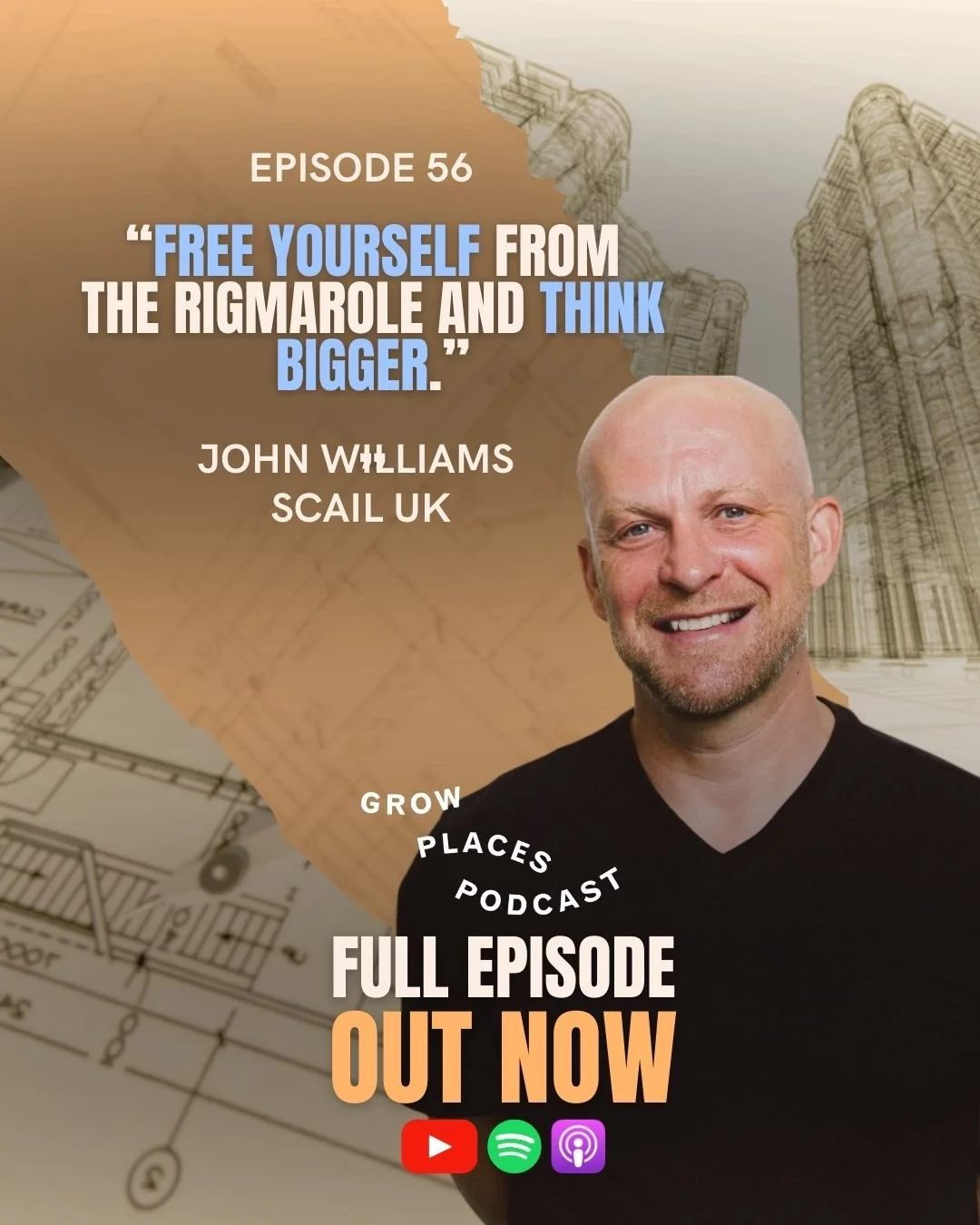
This month's conversations brought together two people working on what appear to be opposite ends of the built environment. One with Ailish Killilea at The Townscape Consultancy, whose work involves understanding the layers of history, culture and significance that make places what they are. The other with John Williams at Scail UK, whose work involves structuring data so that AI can help businesses make better decisions.
Yet both are doing fundamentally the same thing. They are synthesising, taking multiple sources, patterns and precedents, and connecting them into something coherent that helps others understand what matters and what to do next.
John put it directly. In a world where information is freely available, the skill that will matter is not retaining knowledge but synthesising it. And heritage work, as Ailish described it, is precisely that, the synthesis of layers of city history, culture and trends into judgments about what should be preserved, what can change, and how new design can add to what already exists
Heritage as Synthesis
"It really is kind of preserving what's important from the past by allowing new and positive design or a new layer to be added in our cities."
Ailish Killilea, The Townscape Consultancy
Ailish described her work as constructive conservation, and the word constructive carries weight. Heritage consulting is not about applying fixed rules or blocking change. It is about synthesising multiple streams of information, historical significance, architectural precedent, how people experience a place, and using that synthesis to guide new design.
That synthesis draws on research into a building's history, knowledge of how similar projects have been approached elsewhere, and collaborative review within teams. It requires understanding not just what is visible but what is experienced as people move through a space.
"We coin it to be a critical friend."
She spoke about serial vision, the way we experience cities not as static views but as sequences of moments. Heritage work synthesises that experiential knowledge with historical understanding to communicate what a future place could feel like, not just what it would look like.
What makes that synthesis difficult is that much of it rests on judgment. Which precedents are relevant. What elements of a building carry significance. Those judgments depend on accumulated knowledge, collaborative sense-checking, and the ability to connect disparate pieces of information into a coherent recommendation.
Ailish reflected on why she does this work, the belief that it is possible to introduce change in a way that makes a place better for people, even if the contribution feels small. That belief only holds if the synthesis is done well.
Data as Synthesis
"It's not so much about the AI, it's about the story behind your data."
John Williams, Scail UK
John's work begins with a problem most businesses have not acknowledged. They have data, conversations, emails, planning documents, site visits, but that data is not structured in a way that allows synthesis. It sits in fragments, in people's heads, in underutilised CRMs, in documents that are filed and forgotten.
"Most businesses don't have a good enough view of their customer."
The solution is not better AI, it is better synthesis. Recognising that all of those fragments are potential data points. Structuring them in ways that make patterns visible. Building systems that capture what matters consistently.
John was candid about where real estate sits. Consumer-facing industries have been synthesising customer data for years. Real estate has relied more on relationships and supposition, and that gap is now starting to matter.
The firms that can take messy, unstructured information and connect it into usable knowledge will move faster and make better decisions. Those that cannot will find themselves at an increasing disadvantage.
"Retaining knowledge won't be the key to professional success. It'll be much more about your ability to synthesise."
The parallel with Ailish's work is exact. In both cases, the intelligence, whether human judgment or AI analysis, depends on the quality of synthesis. Heritage consultants synthesise layers of history, precedent and experience into recommendations. Data consultants synthesise streams of business information into structures that allow better decisions. Neither is about storing information. Both are about connecting it.
Three Reflections We’re Carrying Forward
First, synthesis is a skill, not a given. Both conversations made clear that bringing together disparate sources into coherent understanding requires discipline, judgment and practice. Heritage work synthesises history, experience and precedent through collaborative review. Data work synthesises business information through structured capture. In both cases, the synthesis is the work, and doing it well requires sustained attention.
Second, layers matter more than snapshots. Ailish spoke about cities as places that evolve through layers, each generation adding something that either enriches or diminishes what came before. John spoke about businesses building up datasets over time. Both rejected the idea of starting from scratch. The synthesis only works when it accounts for what already exists.
Third, synthesis distinguishes good work from mediocre. Anyone can collect information. Heritage consultants can document a building's history. Data teams can gather customer records. But turning that information into something useful, into recommendations that guide design, into insights that inform strategy, requires synthesis. That capacity to connect, to see patterns, to apply judgment informed by multiple sources, is what separates work that adds value from work that simply accumulates material.
Looking Ahead
What connected these conversations was a shared recognition that the work that matters now is synthesis.
Ailish synthesises layers of city history, culture and significance into judgments about how places can change while retaining what makes them valuable. John synthesises streams of business data into structures that allow better decision-making. Both are responding to the same underlying shift, information is abundant, but the ability to connect it meaningfully is rare.
As John pointed out, retaining knowledge is becoming less valuable when retrieval is instant. What matters is the capacity to synthesise what exists into understanding that guides action.
The places we build and the organisations we run will increasingly reflect not how much we know, but how well we connect what we know. That is a patient, cumulative practice of bringing together multiple sources, testing judgments collaboratively, and building structures that make synthesis possible for others.
More soon,
The Grow Places Team
Missed the conversations?
Catch the full podcast episodes at www.growplaces.com/podcast