
Beyond Generic Everyone: What It Really Takes to Design for the People in Front of You
" Generic everybody does not lead to places that work for very many people at all."
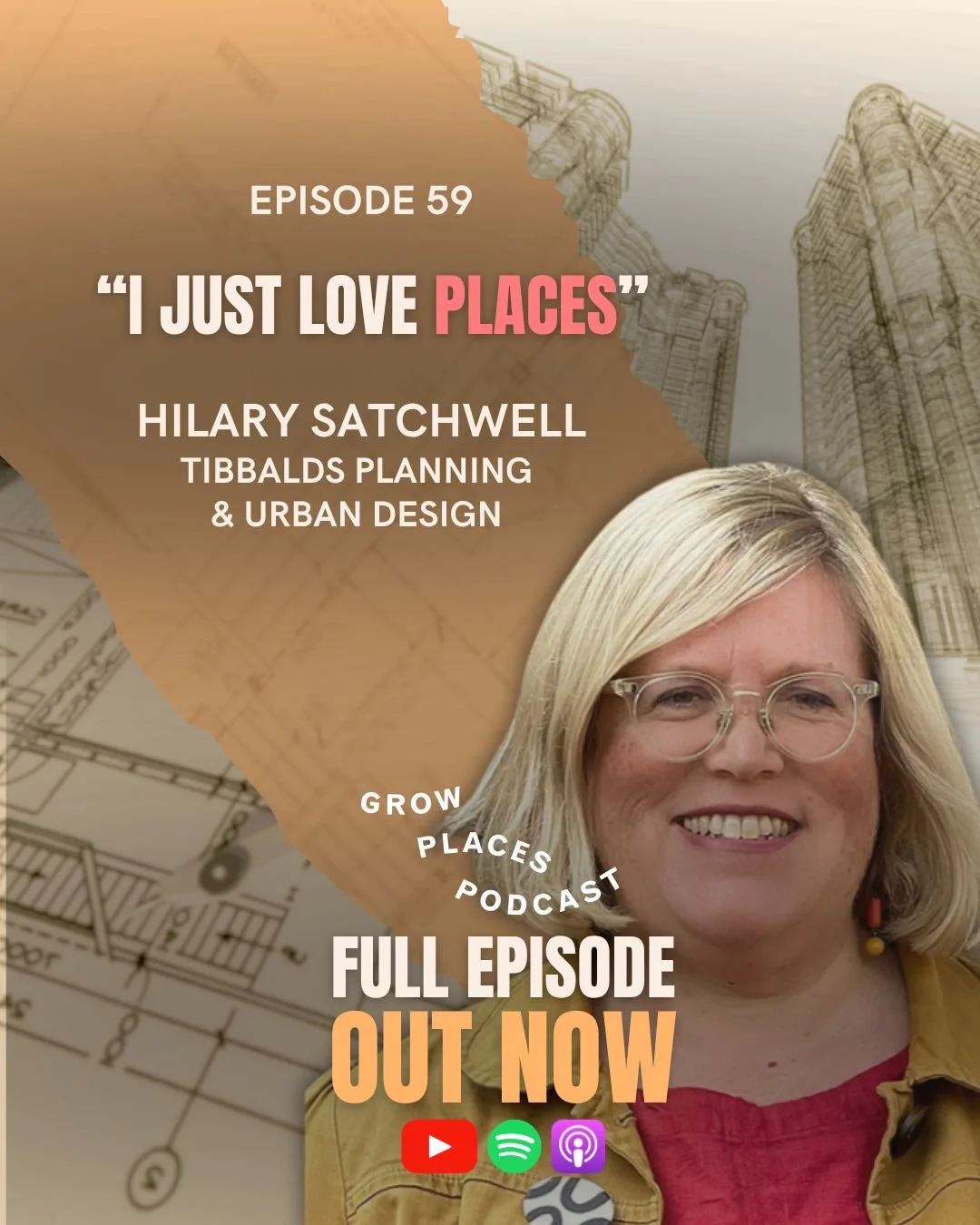
Hilary Satchwell, Tibbalds
Hi everyone,
Welcome to the July edition of Grow Places Insights.
I had two very different podcast conversations recently that took us from a design studio in London to a single street in Copenhagen, and on the surface, Hilary Satchwell of Tibbalds and Christian Søndergaard of Saxogade are working on entirely different problems.
Hilary works across strategic planning and urban design in towns and cities throughout the UK. Christian runs a socio-economic high street in Copenhagen, built around job training for people who have spent years outside the workplace. Yet both conversations arrived, from opposite directions, at the same conviction, that places and programmes only work when they are built around the specific person in front of you, rather than an imagined and undifferentiated everyone
Designing for the Young Girl, the Older Neighbour, the Specific Life
Hilary Satchwell has spent nearly thirty years at Tibbalds, working across the full breadth of planning and urban design, from early-stage briefs and strategies to detailed design review. Her starting point is that good design and good planning cannot really be separated, and that both disciplines only succeed when they are built around people rather than policy documents.
What that means in practice, she explained, is a deliberate refusal to plan for an abstract population. On a large housing project she is currently working on, the team maps the journeys of individual, specific people rather than generic residents. "So you're not thinking about generic everybody, you're thinking, what if this young girl, how would she get to school? How do we make it so her journey feels safe?" That same discipline extends to older residents, to families, to anyone whose daily experience of a place will differ from the next person's.
This specificity runs right through her work, from the scale of a single street to national policy debate. Her recent research into mid-rise, medium-density housing, the so-called "missing middle" between low-rise suburbs and high-rise city centres, is partly an argument that different groups of people, particularly younger generations renting or buying for the first time, need different kinds of homes than the market currently tends to deliver. Through her involvement with Part W and its Built Barriers campaign, she has pushed the same argument into questions of safety and inclusion, asking what a place feels like to specific groups, including women, at specific times. "How would this feel to walk home past this development or through this development at 3am? How would you feel?"
Her conclusion is blunt: designing for everyone in general tends to design for no one in particular. The antidote is not more policy, but a habit of asking who, specifically, a place is for, and building the answer into the brief from the outset.
A Street Built One Person at a Time
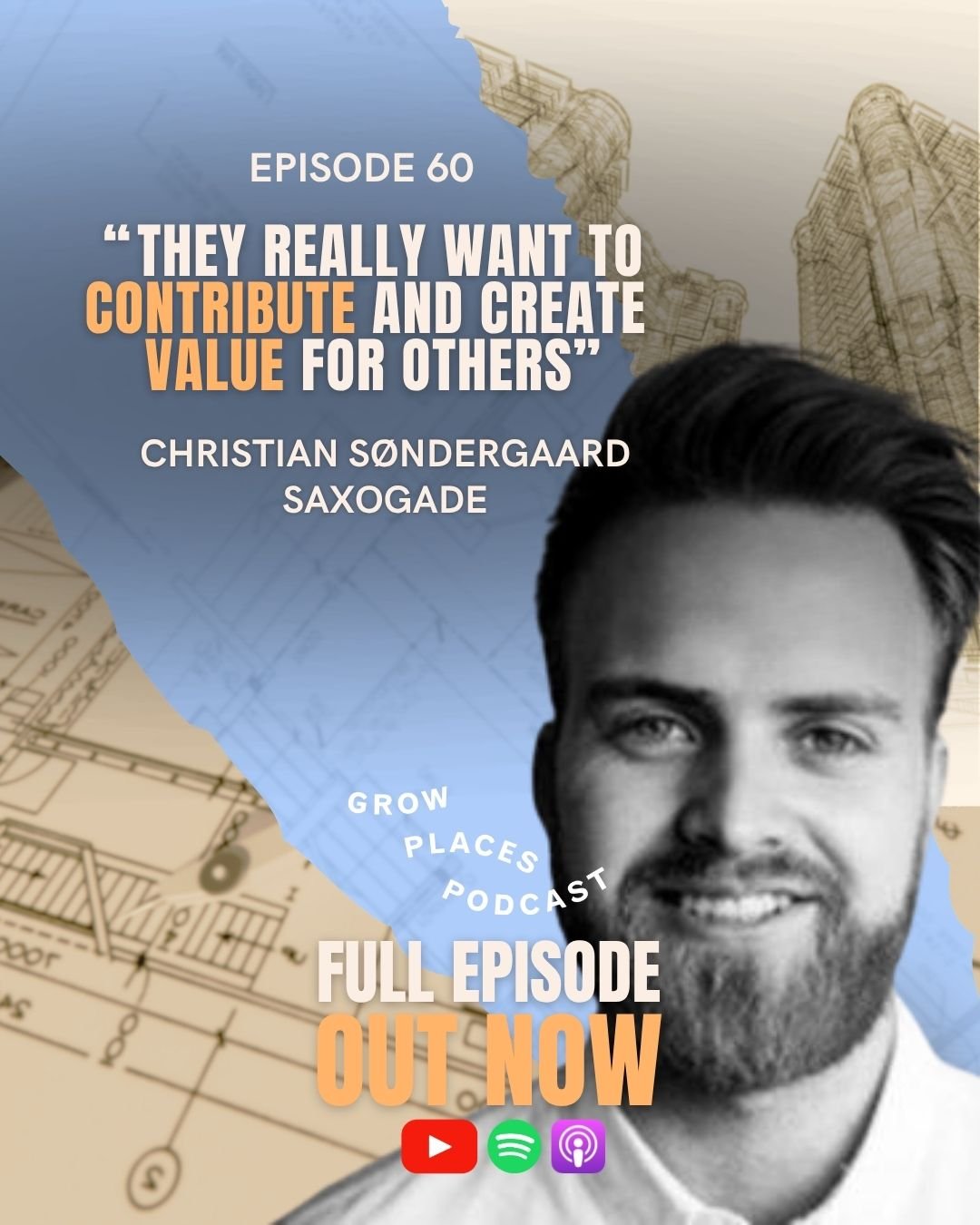
Christian Søndergaard leads Saxogade, a socio-economic street in Copenhagen's Vesterbro district, run by the NGO Settlementet, which has been active in the city for more than a century. Saxogade itself has operated since 1986, combining nine working shops with an intensive job training programme for people who have been outside the labour market for years, often due to illness or long-term social challenges.
What makes the model work, Christian explained, is that every task, in every shop, is built around the person doing it rather than the other way round. "It's not something that we come up with because they have to do something, it's actually something they do because our customers need food on the table, right?" The tasks are real and necessary to the business, but the shape of each one flexes to fit the individual doing it, not a generic job description.
That same instinct extends beyond the shop floor. Events at Saxogade are designed and led by volunteers with different social backgrounds, precisely because a single planning team would never arrive at the same range of ideas. Even the scale of participation is designed around the individual; someone might contribute for thirty minutes at the door rather than an entire shift, and that smaller contribution counts just as much.
The results are tangible. One man who arrived homeless, with a long-standing alcohol problem, was given a task that fitted him, supported by a mentor who helped him find both stability and, eventually, a flat and a job. Christian's reflection on two years at Saxogade was simple: he has never met a person who wanted to sit at home doing nothing. Given the right task, at the right scale, people want to contribute.
Three Reflections We’re Carrying Forward
The first reflection is that specificity is not a luxury add-on to good design, it is the design itself. Hilary's insistence on picturing an actual young girl on her way to school, and Christian's habit of shaping a task around exactly what one particular person can manage, are the same discipline applied in very different settings. Both suggest that the moment a brief starts talking about "users" or "residents" in the abstract, it has already begun to fail the people it is meant to serve.
The second is that this discipline has to be built into process, not left to individual goodwill. Hilary talked about writing project briefs that ask how a place should make people feel, safe, comfortable, energised, rather than briefs that specify only technical outputs. Christian described the genuinely difficult work of coordinating tasks and events so they can bend around each individual volunteer or intern. Neither outcome happens by accident; both require systems built, from the start, to accommodate the person rather than the average.
The third is that this way of working is not more sentimental than the alternative, it is more rigorous. Hilary's argument against generic everyone comes from decades of practical design review, not idealism. Christian is equally insistent that Saxogade's shops must compete commercially on their own terms, not survive on goodwill or pity. Designing around the specific person, in both cases, turns out to be the more exacting standard, not the softer one.
Looking Ahead
Grow Places exists to align vision, partners and direction so that land and buildings can reach their full potential, for people, for place, and for investors. These conversations are a useful reminder of where that alignment actually has to happen, at the level of the individual person whose journey to school, workday, or path back into work depends on choices made long before they arrive.
Growing a place well is never finished, and it is never generic. It is a continuous act of paying attention to the people who are actually there.
With thanks to Hilary and Christian for their time and candour,
The Grow Places Team
Missed the conversations?
Catch the full podcast episodes at www.growplaces.com/podcast