
"The purpose is to produce the energy of place. You need an open-ended, long-term mindset, an ownership mindset, a stewardship mindset."
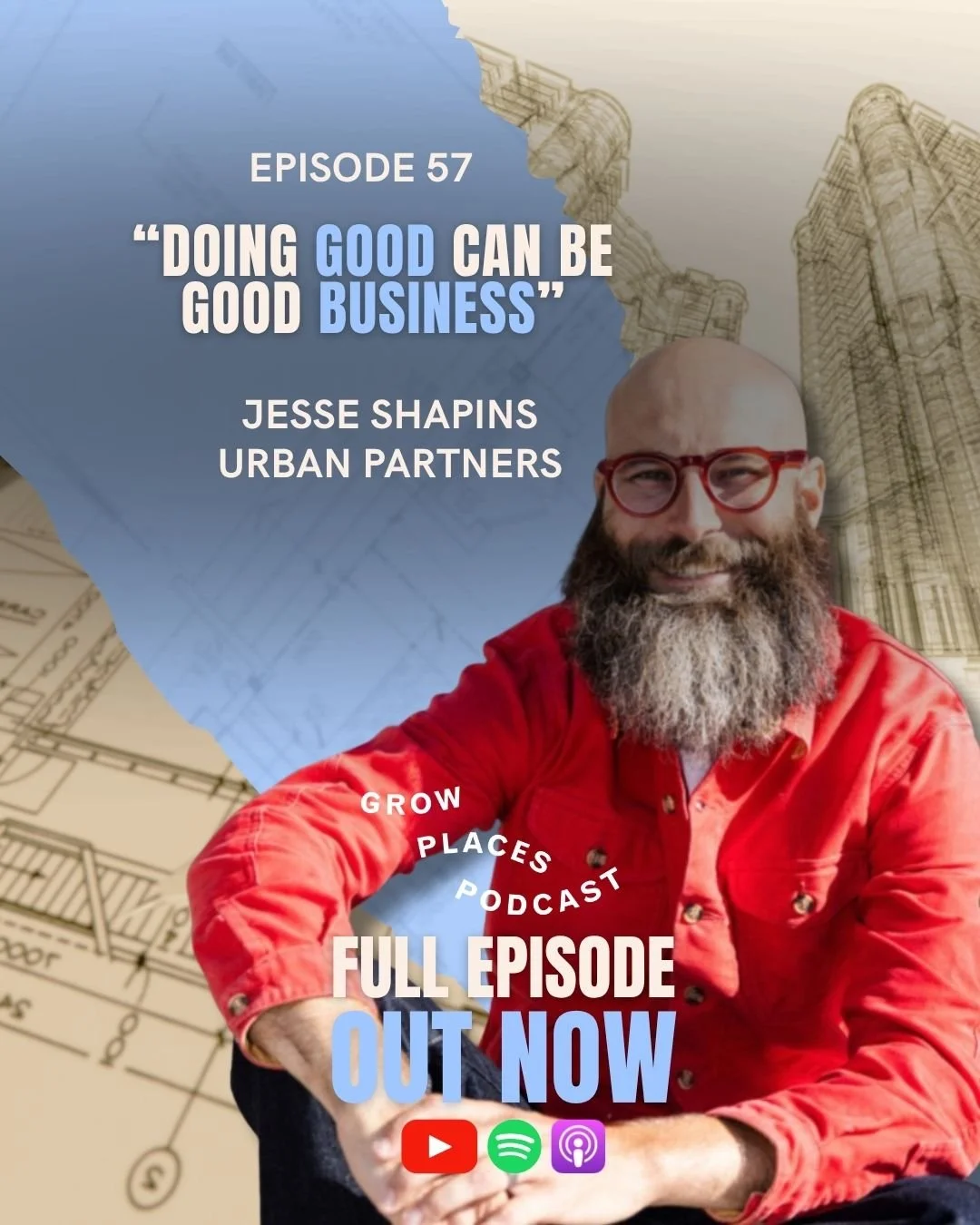
Jesse Shapins, Urban Partners
Hi everyone,
Welcome to the June edition of Grow Places Insights.
This month's conversations brought together two people who, between them, have spent decades at the leading edge of how cities are financed, planned, and delivered. Jesse Shapins of Urban Partners is one of Europe's foremost thinkers on institutional investment in urban regeneration, working at the intersection of capital markets, place-making, and long-term city transformation. Gerry Hughes of Gerry Hughes Consulting is one of the UK's most experienced regeneration practitioners, having shaped some of the country's most significant urban projects across Manchester, Belfast, Bristol, and London over a career spanning four decades.
On the surface, their working lives look very different, with Jesse operating at the scale of funds, cities, and cross-European investment strategy, and Gerry working as the ringmaster, the person at the centre of a complex delivery process, navigating a Belfast city centre regeneration and a nuclear science campus from vision to ground.
Yet both conversations circled back to the same fundamental question: what does it actually take to hold the long view, not as an aspiration, but as a practical discipline, sustained across the decade or more that a serious project demands?
The answer, as both guests made clear, is not found in policy or process, but in people, in the mindset they bring, and in the structures they build to protect that mindset against the pressures that constantly work against it.
Building for the Long Term
"If you suboptimise just for a building, you don't get a place. You get a series of buildings."
Jesse Shapins, Urban Partners
Jesse came to the conversation shaped by his upbringing in Colorado, his time at Sidewalk Labs, and his move to Copenhagen to join what is now Urban Partners, a firm that has spent over twenty years matching institutional capital to neighbourhood-scale transformation across Northern Europe.
At the heart of his thinking is a distinction that sounds simple but has profound consequences: you do not build a windmill to celebrate the construction phase, you build it to produce energy for the long term, and the same logic, he argued, should govern how we approach urban development.
"You need to start with the mindset that the end is a functional operating place. It's not designed to sell individual buildings. You only harness that long-term quality if you have an ownership mindset and an operational mindset."
King's Cross, Jesse argued, is one of the clearest examples of what this looks like in practice, a place designed with a long-term vision of how it should function and feel, where the investment logic followed from that vision rather than the other way around. The result is a place that works as a whole, where housing, ground floor uses, public realm, and workspace reinforce each other rather than coexisting by default.
The challenge is that the traditional development logic is built around the building, not the place, and when you optimise for a single building you get a series of buildings, not a neighbourhood. Achieving the synergy that produces a genuine place requires sufficient scale, a long-term ownership stake, and a willingness to make choices early that may not maximise short-term return, as well as a different kind of capital partner, one that understands, as the Danish pension funds that backed offshore wind across Europe understood, that the purpose is to produce energy for decades, not to profit from the construction phase
The Ringmaster Role
"Delivery in this country is really difficult. It's really difficult often because we make it difficult. How do you actually make these projects happen in reality without losing the inherent vision you have at the start?"
Gerry Hughes, Gerry Hughes Consulting
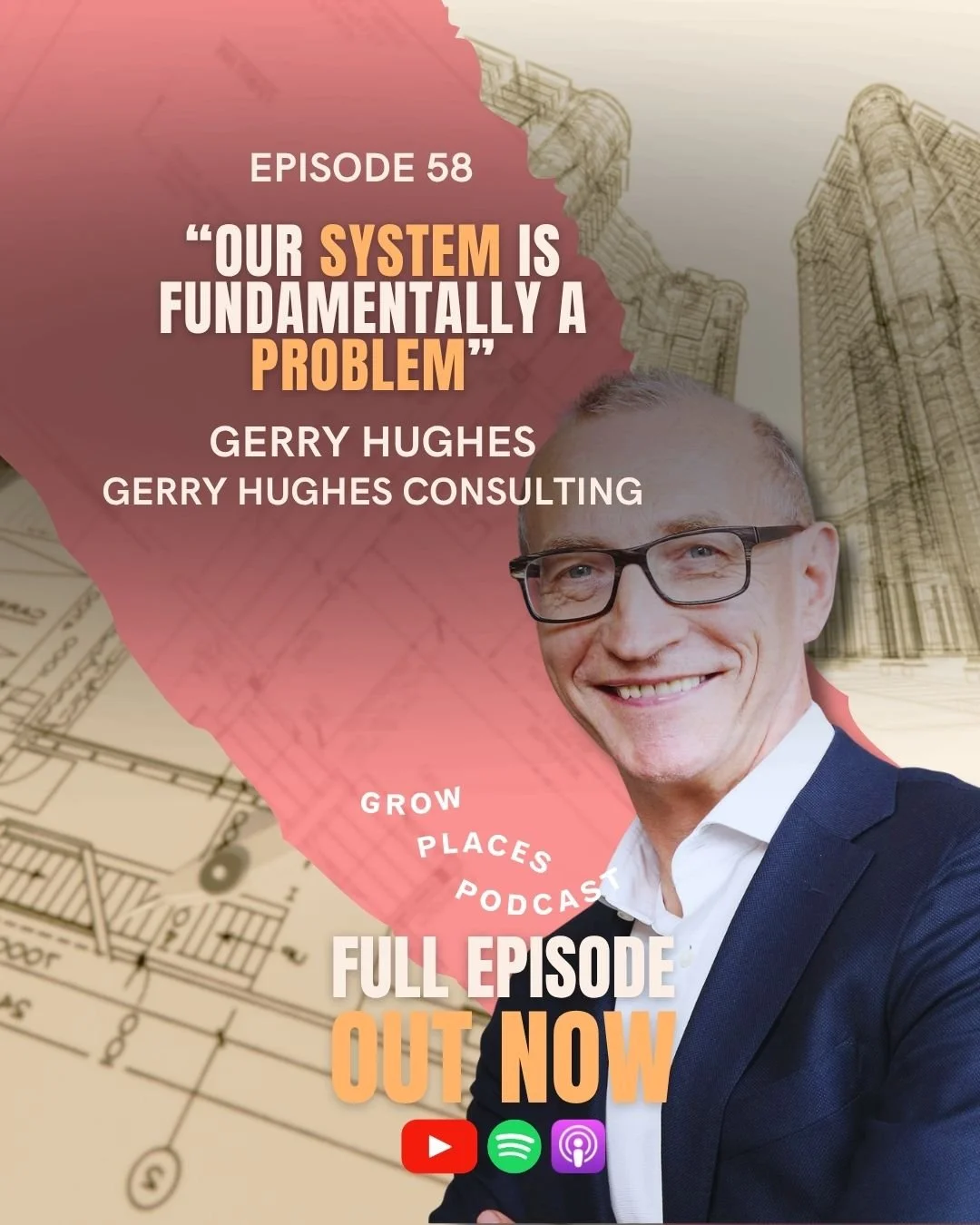
Gerry has spent a career at the centre of exactly this kind of long-term delivery challenge, and his early years at BDP, working under Roy Adams, gave him a formative sense of the role he wanted to occupy, not the specialist, but the coordinator, the person who understands how the disciplines interrelate and can hold the whole process together.
"That was a very important point for me, to see the importance of that role. And that's where I set myself out to be. Always be the ringmaster, always be the person at the centre of the whole process."
What that role requires, above everything else, is the ability to sustain a clear long-term vision while navigating the pressures that erode it, requiring strategic thinking, an ability to see across disciplines rather than being embedded in any one of them, the discipline to challenge a process that has become an end in itself, and the kind of leadership that keeps people working together and moving towards the same goal, even when the path shifts. The planning system adds months, sometimes years, and the bureaucracy, as Gerry described it, is mutually reinforcing, with each challenge from a regulator met by compliance from consultants rather than challenge, adding cost and time without adding value.
The East Manchester Regeneration Framework, which Gerry helped lead, remains a touchstone for him, a 360-degree strategy that addressed not just the physical environment but the economics, the social fabric, and the long-term civic ambitions of the city. The results are visible today in Ancoats and the Northern Quarter, places where people have a genuine sense of ownership and where the vitality that comes from that is palpable, having held through changes of leadership, shifting funding landscapes, and all the pressures that a decade-long programme accumulates.
His current project in Belfast carries the same ambition, with a thousand new homes and a hundred thousand square feet of active ground floor use in the heart of a city at the start of its own renaissance, designed from the streetscape up, with heritage, public realm, and neighbourhood quality placed before the architecture.
"You navigate the short term, you lead the process rather than react to it, from a point of view of understanding what the obstacles are likely to be and finding ways over them and on to the next stage."
Three Reflections We’re Carrying Forward
The first is that the long view is not a default but a choice, one that has to be actively defended against a system that consistently rewards short-term thinking, whether that means reorienting investment logic around ownership and stewardship, as Jesse argued, or maintaining the discipline of challenge across a decade-long delivery process, as Gerry described.
The second is that the right structures matter as much as the right intentions, and even the most well-intentioned partnership will fail if the structure cannot adapt, if the legal framework is wound too tightly to flex when circumstances change, or if the capital logic does not account for the time and patience that quality place-making demands. Shared vision is essential, but it has to mean something in practice, a genuine alignment on objectives, not a high-level statement that breaks down at the first point of real tension.
The third is that the people who can think across disciplines, holding the strategic picture while coordinating the technical detail, are becoming rarer, as silos deepen and specialists grow more specialised and the generalist view that connects them grows harder to find. What Jesse called the ecosystems lens and what Gerry called strategic thinking are, at root, the same capacity, and it is precisely the capacity that long-term, quality-led regeneration most depends on.
Looking Ahead
It would be easy to read these two conversations as cautionary, as accounts of a system that makes the long view very difficult to sustain, but neither guest ended there.
Jesse is cautiously but genuinely optimistic that capital is beginning to align, that institutions which once focused purely on return are starting to understand that quality, resilience, and long-term stewardship are not in tension with commercial performance, but are, in the right structures, the same thing. Gerry is optimistic that devolution is creating the conditions for civic leadership to step up, that the energy in his Belfast project, and in the conversations happening between public and private actors who want to do the right thing, is real and worth harnessing.
What connects both perspectives, and what we keep returning to at Grow Places, is what Simon Sinek describes as the infinite mindset: the understanding that in an infinite game, the goal is not to win but to keep playing. Places are not finished projects, they are living systems, shaped continuously by the people, investment, and leadership that flow through them, and the practitioners who build well are those who understand this instinctively, who measure success not by the transaction but by whether the place continues to grow, adapt, and serve the people who call it home. That is the only horizon worth building towards.
More soon,
The Grow Places Team
Missed the conversations?
Catch the full podcast episodes at www.growplaces.com/podcast