
Finding the Gold Dust: The Value That's Already There
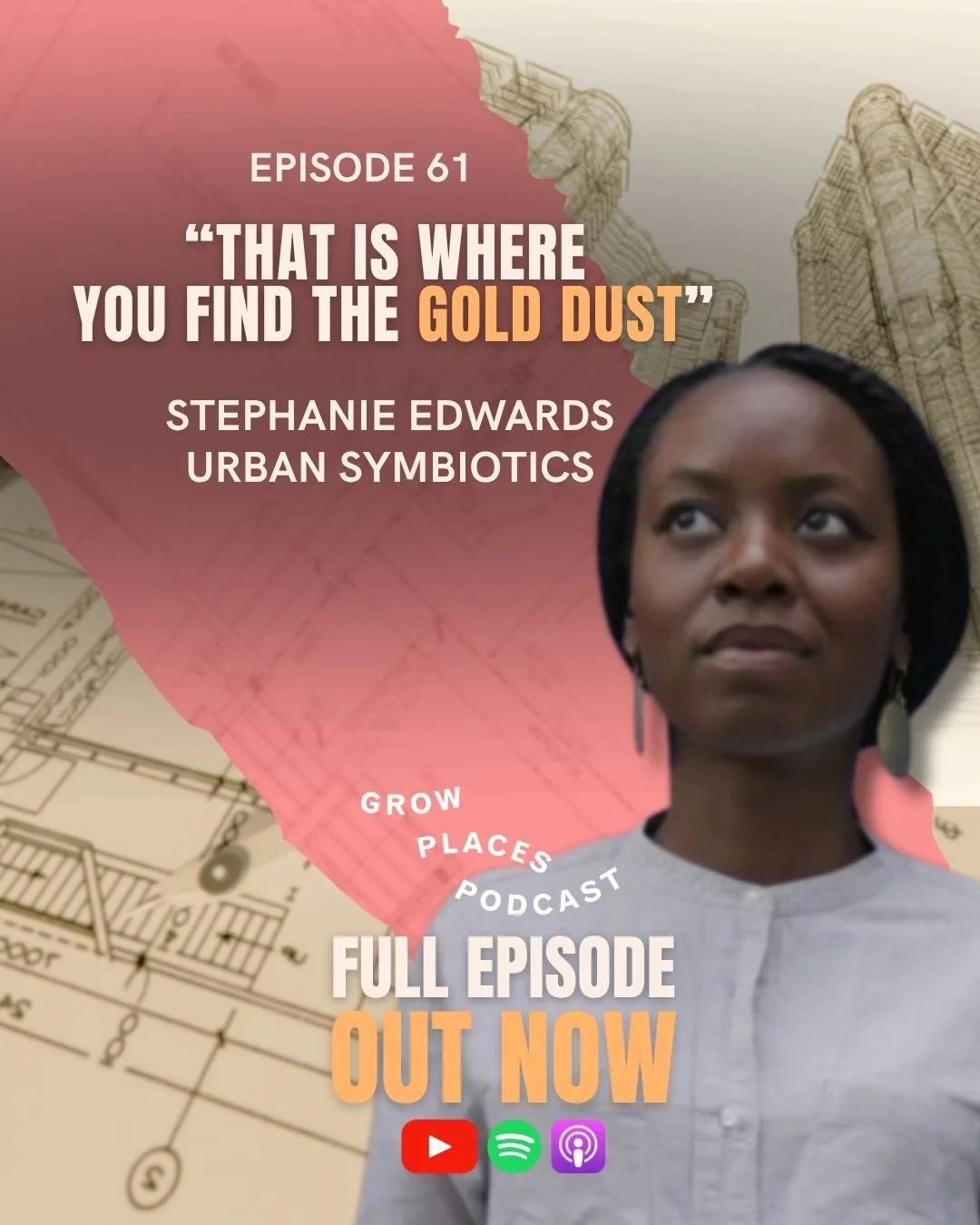
" It is about being hyper-local in a way that it becomes quite specific to that place. That is where you find some of the gold dust."
Stephanie Edwards, Urban Symbiotics
Hi everyone,
Welcome back to Grow Places Insights after our summer break.
This edition brings together two conversations that, on the surface, sit at very different scales. Stephanie Edwards of Urban Symbiotics builds her work around demographically representative community engagement, turning thousands of individual conversations into evidence.
Tom Holbrook of 5th Studio works across Oxbridge colleges, new towns, and railway infrastructure, wherever disciplines and boundaries collide. Yet both are, at heart, looking for the same thing, real value that is already sitting in a place, waiting to be properly seen. Stephanie calls it gold dust: the hyper-local memory, meaning, and lived experience that only surfaces when engagement goes deep enough to find it. Tom finds the same kind of value at the fringes and edges other people find too complicated to touch. Both conversations point to the same conclusion, that paying real attention to the people and the specifics of a place is what unlocks its full potential.
Finding the Gold Dust
Stephanie Edwards co-founded Urban Symbiotics on a simple premise: people, data, and design have to work together, not in sequence. Her team builds a demographic baseline for every project, then designs engagement to actually reach it, going to churches, mosques, stay-and-play groups, and areas of high footfall, with a team that speaks over thirteen languages between them. The result is rarely just a few hundred comments. It is often five or six thousand individual insights, mapped and themed by sentiment, topic, and intervention, and turned into a genuine evidence base that can unlock funding as well as shape design.
What that hyper-local attention surfaces is not always obvious in advance. On a masterplan in the Lebanese mountains, a place known for religious pilgrimage and quiet retreat, that same process led to an intergenerational community for the area's growing elderly population, built from the memory and meaning residents already attached to the place. "It is about being hyper-local in a way that it becomes quite specific to that place. That is where you find some of the gold dust." Working on Camden Town for Camden Council, the challenge is the opposite problem, protecting an eclectic, authentic place from becoming over-commercialised or sanitised as it evolves.
Stephanie is direct about what is at stake when this work is treated as a nice-to-have. She points to the Grenfell Tower inquiry, where the one group recognised for its resilience and care for victims was the community itself, as a stark reminder that listening to the people affected by a place is not decoration on top of good design. It is essential to it.
Where Severance Meets Opportunity
"The railway, although it connects stuff up, creates severance and creates a kind of scar tissue."
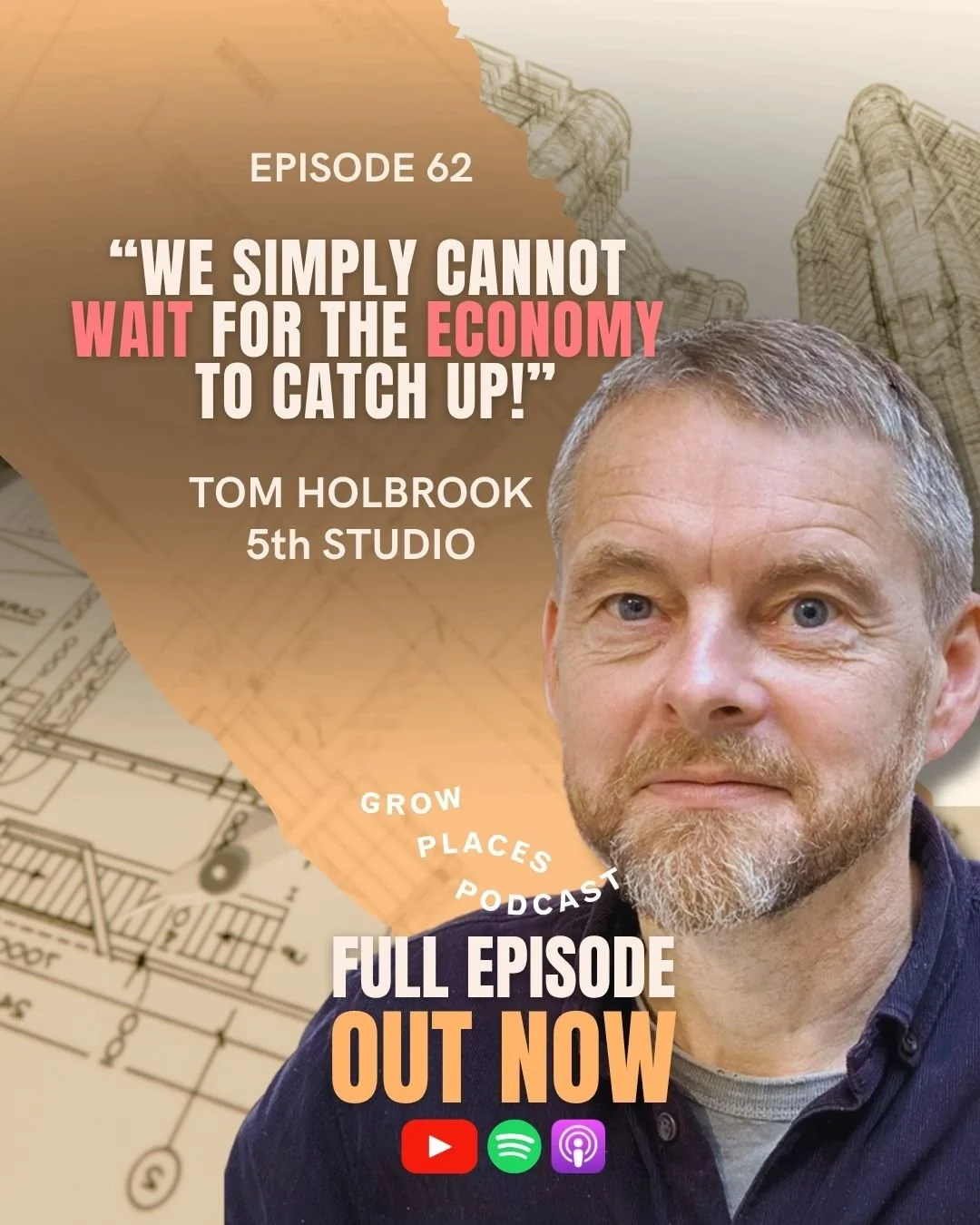
Tom Holbrook founded 5th Studio with a portfolio that spans Oxbridge colleges, new towns, and heavy railway infrastructure, a spread he has struggled to describe without sounding vague, originally settling on "generalist" before deciding nobody wants to hire one. What actually unites the practice, he explained, is a comfort working in genuinely fringe locations, the edges of cities, the boundaries between planning authorities, the very scar tissue he describes. These are the sites everyone else finds difficult to touch, precisely because a river, a political boundary, and a difficult rail line rarely respect each other's edges.
His clearest example is the Olympic Park, where 5th Studio has now worked for close to twenty years, through the 2008 financial crisis and several economic cycles since. The project succeeded, he argues, not because the site was easy, but because a development corporation with the power to assemble land and take on risk stayed committed through the difficulty. "Those are the places where it just needs a lot of intervention to make something happen." He is currently applying the same thinking to railway land more broadly, arguing that severance, the difficulty of crossing or working alongside a line, is exactly where the best placemaking opportunity sits, if the infrastructure and the place-based thinking are brought together rather than left in separate silos.
Tom is candid that the current economic climate makes this harder, not easier. He points to the 1944 London Plan, drafted from the ruins of the Second World War, as a reminder that the most constrained moments have historically produced the freshest thinking, from the NHS to new approaches to education and housing. His argument is that the current viability crisis needs a similar jolt, rather than continued stodging on with an approach that no longer works.
Three Reflections We’re Carrying Forward
The first is that the richest opportunities tend to sit exactly where most people stop looking. Stephanie's gold dust is found in memory, nostalgia, and hyper-local specificity that only surfaces through genuine engagement. Tom's opportunities sit at literal boundaries, railway lines, political edges, places where infrastructure has left scar tissue. Neither is describing an easy site made valuable by clever marketing. Both are describing real value that was already there, waiting to be properly seen.
The second is that finding that value takes real effort, not shortcuts. Stephanie's team runs thousands of individual conversations and turns them into structured evidence precisely because a survey alone would miss the nuance. Tom's practice deliberately keeps strategic and delivery thinking within the same small team, rather than splitting them across silos, because the fringe locations he works in demand both at once. The depth of the method is what makes the difference, not the ambition of the intent.
The third is that difficulty itself can be the catalyst for better thinking, not just an obstacle to work around. Tom's reading of the 1944 London Plan is that genuinely hard periods have historically produced the freshest ideas. Stephanie's account of the Grenfell Tower inquiry makes the same point in a much more serious register, that ignoring difficulty has consequences, and taking it seriously is where real resilience is built.
Looking Ahead
Grow Places exists to align vision, partners, and direction so that land and buildings can reach their full potential, for people, for place, and for investors. This month's conversations are a useful reminder that the sites and processes which look most difficult on paper, the boundary condition, the fragmented ownership, the community engagement that takes months rather than weeks, are often exactly where that full potential is waiting.
Growing a place well means being willing to work in the difficult bits, not just around them.
Our thanks to Stephanie and Tom for their time and candour,
The Grow Places Team
Missed the conversations?
Catch the full podcast episodes at www.growplaces.com/podcast